What Is a Tripod Head? The Complete Guide to Choosing the Right Tripod Head
When you think about a tripod, the first thing that comes to mind is stability. But have you ever wondered what part of the tripod actually holds and moves your camera? That critical component is the tripod head. Whether you're a professional photographer, videographer, or passionate creator, understanding what a tripod head does — and which type suits your shooting style — can completely transform your results.
In this guide, we’ll explain what is a tripod head, why it matters, explore the different types of tripod heads such as ball head tripod, fluid head tripod, and gimbal head, and help you learn how to choose the right tripod head for your needs.
1. What is a Tripod Head?
A tripod head is the top part of your tripod that connects your camera to the tripod legs. It allows you to adjust, rotate, and lock your camera into the perfect position.
Think of it as the brain of your tripod—it controls movement, balance, and precision. A good tripod head makes it easy to tilt your camera up or down, pan left or right, and hold your shot securely without shaking.
There are different designs depending on your photography style. For example, a ball head tripod gives you fast and flexible control, while a fluid head tripod head offers silky-smooth motion ideal for video recording.
If you’ve ever wondered what is a tripod head, it’s simply the essential connection that turns your tripod from a static stand into a dynamic tool for creativity.
2. The Importance of a Tripod Head
The tripod head is more than just a mount — it’s the precision tool that determines how smoothly you can compose a shot. Whether you’re shooting photos or videos, the type of tripod head you use affects stability, control, and workflow.
Here’s why choosing the right tripod head is so important:
1. Precision and Control – A high-quality ball head for tripod or fluid head tripod head lets you make micro-adjustments with ease, ensuring perfectly level horizons and precise framing.
2. Smooth Motion for Video – For videographers, a fluid head tripod is indispensable. Its hydraulic damping system ensures ultra-smooth pans and tilts, eliminating jerky motion.
3. Flexibility for Different Gear – Some setups, like telephoto lenses, require a gimbal head for balanced, fluid movement. Others need compact heads for portability.
4. Efficiency and Speed – A good ball head tripod lets you quickly adjust your camera’s angle and lock it in place in seconds — crucial for travel and outdoor photography.
Simply put, the tripod head transforms a static stand into a dynamic, precision instrument. Without it, your tripod is just a set of legs.
3. Different Types of Tripod Heads
Choosing the right tripod head depends on what and how you shoot. Let’s look at the most common types and their ideal use cases.
Quick Comparison Table
Type of Tripod Head | Best For | Key Benefit | Example Use |
Ball Head | Travel, General Photography | Fast setup & flexibility | Portraits, Landscape |
Fluid Head | Videography | Smooth, cinematic motion | Vlogging, Film, Sports |
Gimbal Head | Wildlife, Telephoto Lenses | Balanced motion tracking | Bird photography |
Pan-Tilt | Studio, Architecture | Independent axis control | Product & Studio shoots |
Geared Head | Precision Work | Micro adjustments | Macro or Architectural shots |
3.1 Ball Head
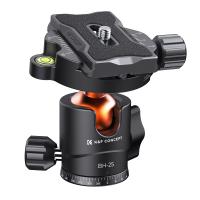
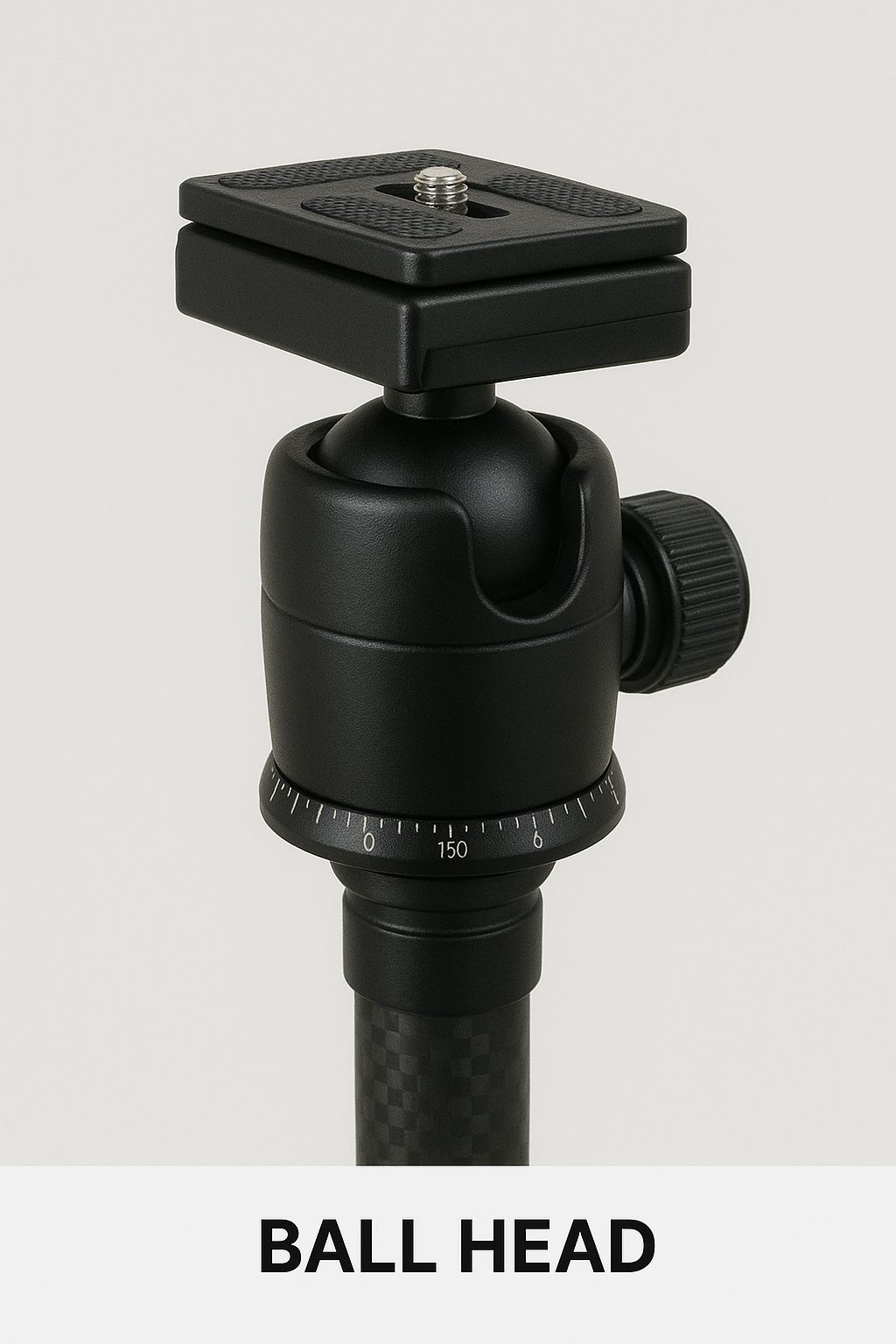
The ball head tripod is one of the most popular types for photographers. It features a ball-and-socket design that allows 360° rotation and multi-directional movement. You can easily adjust the camera’s position with a single control knob.
Advantages:
² Quick and intuitive adjustments
² Compact and lightweight
² Ideal for photography, especially travel and landscape shots
A tripod ball head offers the perfect balance between flexibility and stability. Whether you’re shooting a mountain sunrise or street photography, a ball head for tripod gives you instant freedom to reframe your composition.
When paired with carbon fiber or aluminum legs, a ball head tripod setup becomes the ultimate lightweight, travel-friendly tool for photographers on the go.
3.2 Fluid Head
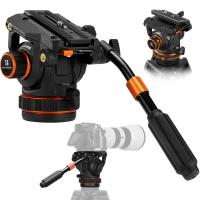
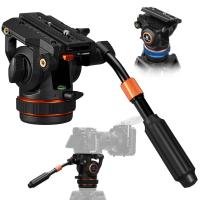
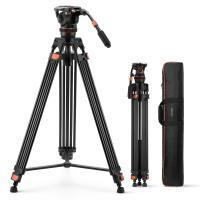
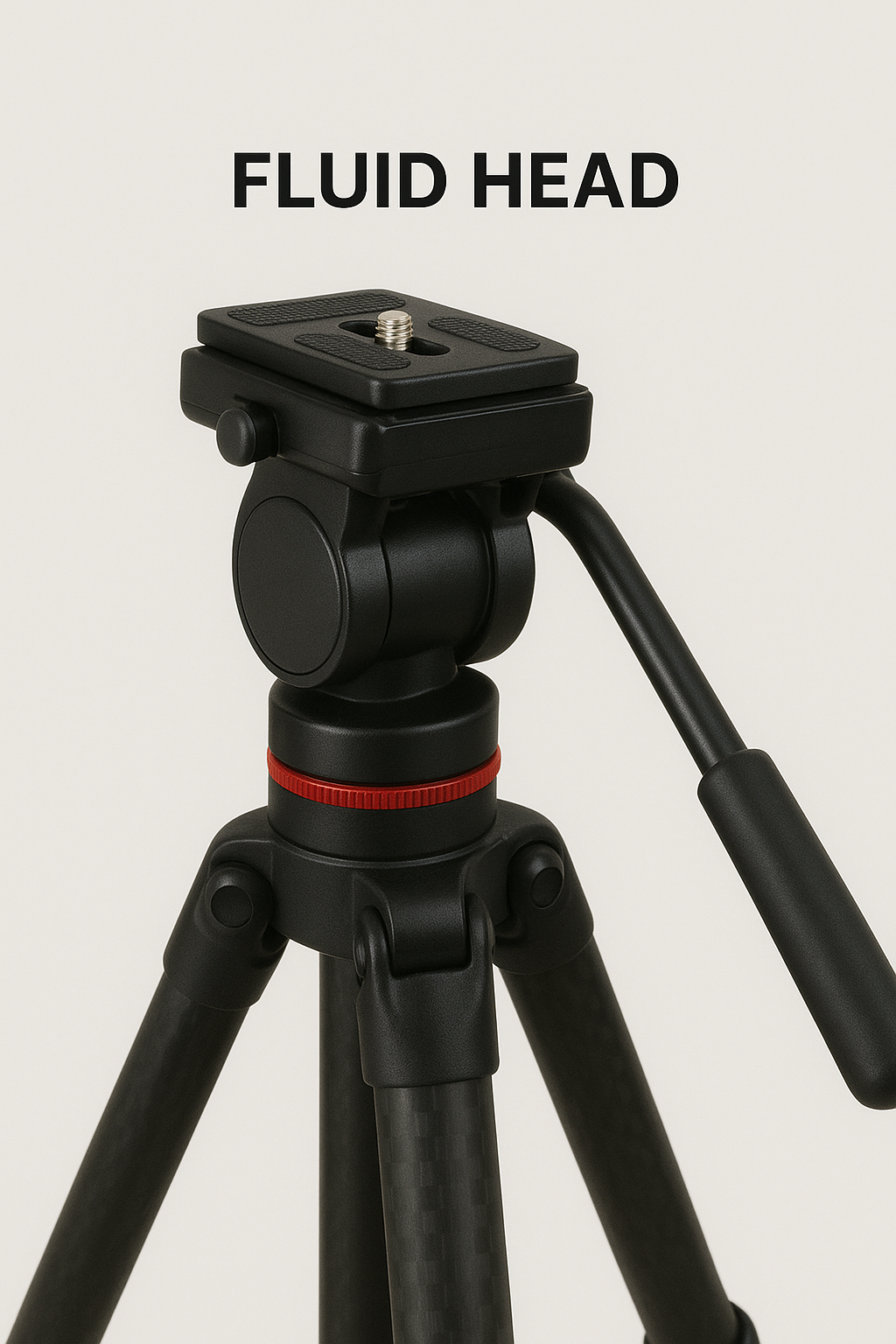
The fluid head tripod is the go-to choice for videographers. It uses a hydraulic damping system to create smooth, controlled movement — essential for professional-looking pans and tilts.
Advantages:
² Ultra-smooth camera motion
² Excellent for video or long telephoto shots
² Adjustable drag resistance
A fluid head tripod head is designed to give cinematic motion, eliminating jerks or abrupt stops. Whether you’re filming wildlife, weddings, or product videos, the fluid head tripod ensures consistent, fluid transitions.
If you often switch between photo and video work, consider a hybrid model that combines ball head flexibility with fluid head smoothness.
3.3 Gimbal Head
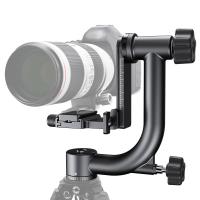
A gimbal head is a specialized tripod head designed for heavy camera setups and telephoto lenses. It balances the weight of your camera and lens, allowing smooth movement in all directions with minimal effort.
Advantages:
² Perfect for wildlife and sports photography
² Supports heavy lenses
² Provides fluid, balanced motion
So, what is a gimbal head exactly? Imagine being able to track a bird in flight or a car speeding by, effortlessly following the subject without shaking or strain. That’s the magic of a gimbal head.
This type of tripod head keeps your camera stable yet responsive — ideal when precision tracking is crucial. While heavier and pricier than standard heads, a gimbal head is a game-changer for professionals.
3.4 Pan-Tilt Head
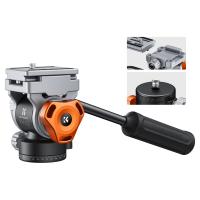
The pan-tilt head features separate handles or knobs for panning and tilting. Unlike a ball head tripod, which moves freely in all directions, a pan-tilt head offers controlled, two-axis movement.
Advantages:
² Independent pan and tilt control
² Precise framing for still photography
² Excellent for studio or architectural shots
This tripod head is perfect when you need accuracy over speed. It’s bulkier but ideal for photographers who need consistent framing or work in a controlled setup.
3.5 Geared Head
The geared head is the most precise type of tripod head available. It uses gears to make small, incremental adjustments — perfect for macro, product, and architectural photography.
Advantages:
² Extremely precise adjustments
² Perfectly level alignment
² Ideal for high-end photography
If you need fine control, a geared head outperforms even a ball head tripod in accuracy. Though slower to adjust, it provides unmatched precision for critical compositions.
4. How to Choose the Right Tripod Head ?
Now that you know the different types, how do you choose the perfect tripod head for your needs? Here’s a simple guide:
a. Identify Your Shooting Style
l Travel & Everyday Use: Choose a ball head tripod—light, fast, and reliable.
l Video & Vlogging: Go for a fluid head tripod to achieve professional smoothness.
l Wildlife or Sports: A gimbal head helps you track fast-moving subjects effortlessly.
l Studio & Product Work: Pick a geared head or pan-tilt for ultimate precision.
b. Check Compatibility
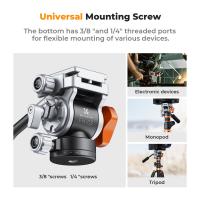
Before buying, make sure your new head fits your tripod legs. Most tripod heads use a standard screw mount, making it easy to switch. If you’re upgrading, just learn how to remove tripod head—usually, you twist it counterclockwise until it detaches.
c. Load Capacity
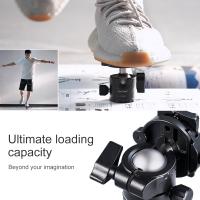
Choose a head that supports your camera’s weight (including lens). Overloading a tripod ball head can cause slippage and instability.
d. Material & Build Quality
High-quality fluid head tripod head or ball head for tripod models made from aluminum or carbon fiber are durable yet lightweight—ideal for outdoor adventures.
e. Brand Reliability
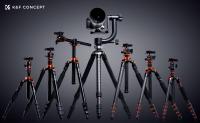
Brands like K&F CONCEPT combine professional performance with affordability. Their fluid head tripod, ball head tripod, and gimbal head options are built for creators who want smooth, reliable, and portable gear.
5. Conclusion
A tripod head is more than just a connector—it’s the foundation of control and creativity. Whether you choose a fluid head tripod, a tripod ball head, or a gimbal head, investing in the right one means sharper images, smoother videos, and more professional results.
If you’re ready to upgrade your gear, explore the range of Kentfaith tripods and tripod heads on Kentfaith Australia. You’ll find everything from lightweight travel ball head tripods to advanced fluid head tripod heads designed for cinematic performance.
So the next time someone asks “what is a tripod head?”, you’ll not only know the answer—you’ll know exactly which one suits your creative journey best.