Sony A7M5 vs A7M4 Comparison Review
On December 2, 2025, Sony officially launched the new A7M5 (A7 IV Mark II) at a starting price of US $2,899.99. As the latest all-around full-frame mirrorless camera, the A7M5 brings significant upgrades in sensor performance, continuous shooting, autofocus, video capabilities, and body design. Compared with the highly popular A7M4, Sony’s new model aims to strengthen its position as the brand’s most balanced “do-everything” camera.
This review takes a professional, side-by-side look at the A7M5 and A7M4 to help you decide whether the upgrade is truly worth it.
1. Sony A7M5 vs A7M4: What’s the Difference?
The Sony A7M5 represents the next-generation evolution of Sony’s all-around full-frame mirrorless series, delivering substantial upgrades that directly address the limitations of the A7M4. Although both cameras feature the same 33MP resolution, the similarities largely end there. The A7M5 introduces a new partially stacked CMOS sensor, enabling drastically faster readout speeds, reduced rolling shutter, and much smoother high-speed shooting compared to the A7M4’s back-illuminated sensor.
In addition, the A7M5 integrates Sony’s latest BIONZ XR2 processor with a dedicated AI unit, powering more advanced subject detection, improved low-light performance, and greater color accuracy. Its upgraded autofocus system brings next-generation AI real-time tracking with expanded subject recognition—now capable of identifying people, birds, animals, vehicles, trains, drones, and even insects—far surpassing the A7M4’s more limited detection range.
For hybrid shooters and content creators, the A7M5’s video improvements are even more significant. The camera offers 7K oversampled 4K 60P recording with no crop, delivering noticeably cleaner detail, smoother motion, and better dynamic range than the A7M4, which is capped at 4K 30P without oversampling at higher frame rates. These upgrades make the A7M5 a far more capable tool for action photography, fast-paced events, wildlife tracking, and professional video production.
Sony A7M5 vs Sony A7M4 Comparison Table
Specification | Sony A7M5 | Sony A7M4 |
Release Date | December 2, 2025 | October 21, 2021 |
Price | ¥17,999 | ¥13,172 |
Effective Pixels | 33 MP | 33 MP |
Sensor Type | Partially stacked CMOS | Back-illuminated CMOS |
Image Processor | BIONZ XR2 (with built-in AI unit) | BIONZ XR |
Dynamic Range | 16 stops | 15 stops |
Continuous Shooting | 30 fps (electronic) / 10 fps (mechanical) | 10 fps (electronic/mechanical) |
Max Shutter Speed | 1/16,000 s | 1/8,000 s |
Blackout-Free Shooting | Supported | — |
RAW Bit Depth | 14-bit | 12-bit |
Autofocus System | AI real-time tracking | Fast hybrid AF |
Subject Recognition | Human, Bird, Animal, Vehicle, Train, Drone, Insect | Human, Bird, Animal |
RAW Resolution Expansion | Supported | — |
Video Recording | 7K oversampled 4K 60P (no crop) | 4K 30P (no crop) |
2. Detailed Feature Breakdown: Where the Sony A7M5 Makes the Biggest Leap
Beyond the headline comparisons, the true strength of the Sony A7M5 lies in its deep structural upgrades across imaging, autofocus, speed, video, and body design. While the A7M4 was already regarded as a highly capable all-rounder, the A7M5 pushes the series into a new performance tier with a redesigned sensor architecture, next-generation AI autofocus, flagship-level continuous shooting, and substantial improvements in video recording and stabilization. These enhancements don’t just refine the shooting experience—they fundamentally expand what hybrid creators, photographers, and videographers can achieve with a mid-range full-frame camera.
The following sections break down each major upgrade in detail, explaining what has changed, why it matters, and how these improvements translate to real-world shooting scenarios.
2.1. Core Imaging System: 33MP Partially Stacked Sensor
The Sony A7M5 features a new 33-megapixel partially stacked CMOS sensor—the most critical upgrade. This technological innovation achieves dual breakthroughs in resolution and readout speed. Compared to traditional sensors, the partially stacked structure optimizes the core pixel area design. It maintains 16 stops of dynamic range and excellent shadow detail while boosting data readout speed by over 30%. This satisfies the high-resolution demands of landscape photography and provides hardware support for high-speed continuous shooting. Paired with the second-generation BIONZ XR2 processor, the camera delivers pure image quality at low sensitivities, outstanding noise control in high-ISO environments, and improved jelly effect reduction.
✦ Key Enhancements:
n +30%+ Readout Speed
The partially stacked structure optimizes core pixel data readout efficiency, significantly reducing rolling shutter jelly effects.
n Preserves 16-stop dynamic range
Maintains Sony's signature “tolerance advantage” with exceptional shadow detail and highlight tolerance.
n Purer image quality
Paired with the second-generation BIONZ XR2 processor, it delivers superior noise control in high-ISO scenarios.
✦ What does this mean for users?
Landscape photography → Higher resolution, ample post-processing flexibility
Portrait photography → More natural skin texture
Sports/wildlife → Less jelly effect, steadier images
This represents a balanced solution of “sufficient pixels + faster readout,” perfectly aligning with the A7 series' all-rounder positioning.

2.2. AI Focus System: Flagship-Level Subject Recognition & Tracking
The Sony A7M5 incorporates an AI chip derived from flagship models, establishing a multidimensional subject recognition and tracking system. It accurately identifies diverse subjects including people, animals, birds, and vehicles. Combined with eye detection and full-body modeling technology, it achieves stable and efficient tracking focus. Here's the key point: this dedicated AI processing chip leverages deep learning technology for more precise and comprehensive subject recognition and tracking. Previously implemented in the ZVE1, this AI autofocus system significantly enhances focusing accuracy. Now fully matured, those who haven't experienced it truly don't know how amazing it is—I've never encountered a situation where it failed to lock focus.
2.3. High-Speed Continuous Shooting: 30 fps Blackout-Free, Rivaling Flagship Sports Cameras
For continuous shooting, the electronic shutter delivers 30 fps blackout-free bursts, while the mechanical shutter offers 10 fps. Combined with pre-shooting functionality, it captures decisive moments in high-speed motion—ideal for sports photography and wildlife shooting. To match the high-speed sensor's data throughput, the A7M5 features an upgraded BIONZ XR2 image processor. This enables the camera to achieve up to 30 fps blackout-free high-speed continuous shooting—essentially matching flagship sports camera performance. This represents a significant breakthrough, considering the previous A7M4 only managed 10 fps.
2.4. Video Performance: Addressing the A7M4's Major Weakness
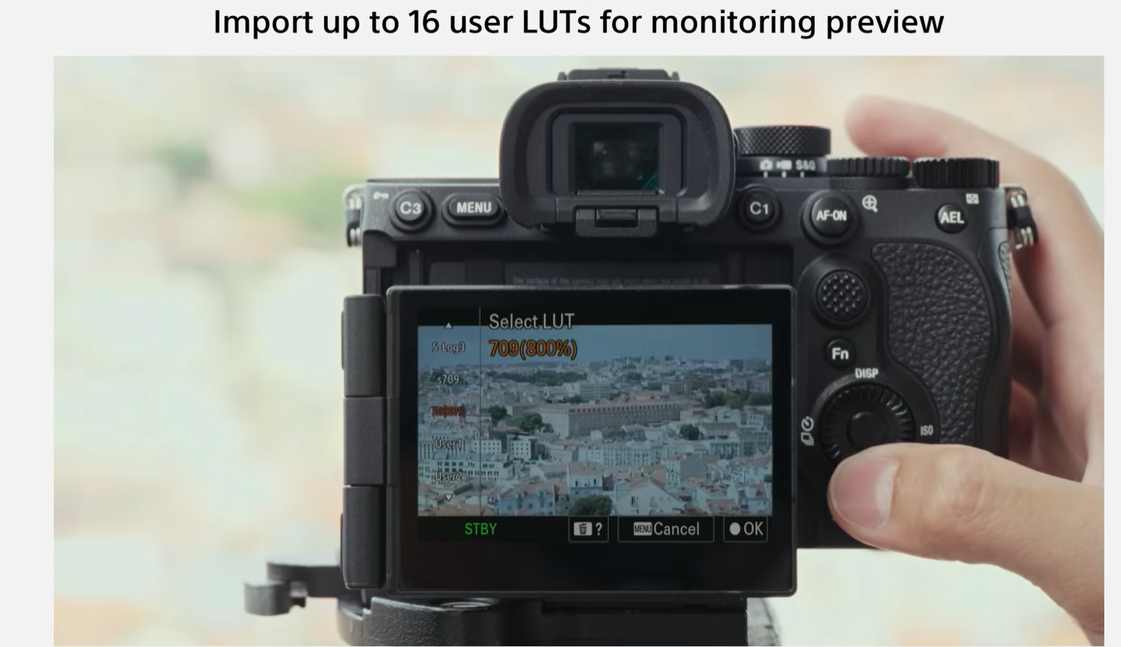
For video, the Sony A7M5 addresses its predecessor's shortcomings by supporting full-frame, uncropped 4K 60p recording. It also offers a 4K 120p (SUPER35 mode) high-frame-rate option for slow-motion creativity. The camera supports 10-bit 4:2:2 internal recording and is compatible with S-CINETONE and S-LOG3 gamma curves. The most significant upgrade in video is the support for full-frame 7K oversampled 4K 60p recording, eliminating the Super 35mm crop (approximately 1.5x) present in the previous A7M4's 4K 60p mode.
2.5. Body Design: Enhanced Image Stabilization with New “Dynamic Stabilization Boost Mode”
Maintaining its professional positioning, the camera features an all-weather-resistant body and an enhanced grip. It combines a 3.2-inch, 2.1-million-dot freely-angled touchscreen with a 5.6-million-dot high-resolution EVF, delivering both operational comfort and durability. The 7.5-stop in-body image stabilization system enhances stability for handheld low-light shooting. Dual memory card slots (SD + CFexpress Type A) and dual USB-C ports meet professional demands for storage security and device connectivity. The in-body stabilization system has been enhanced with the new Dynamic Image Stabilization Boost Mode, which more effectively suppresses image shake during walking or motion shooting. Audio capabilities now include AI-powered noise reduction that intelligently identifies human voices and suppresses ambient noise for superior recording quality.
Priced at US $2,899.99, the Sony A7M5 delivers a heavy blow to the full-frame mirrorless industry: its “all-around, no-weakness” performance dramatically raises the performance bar for professional models. Manufacturers can no longer compete by leveraging a single advantage, forcing them to either invest heavily in technological advancements or retreat to the low-end market.
In summary, the overall upgrades include: improved autofocus, faster continuous shooting, uncropped 4K 60p video, and enhanced image stabilization.
2.6. Sony A7M5 Detailed Specifications:
Category | Specification Details |
Core Sensor | 33MP partially stacked CMOS sensor |
Image Processor | Second-generation BIONZ XR2 processor |
Continuous Shooting | Electronic shutter: 30fpsMechanical shutter: 10fps |
Image Stabilization | 5-axis stabilization, up to 7.5 stops |
Video Recording | 4K 60p (uncropped)4K 120p (cropped) |
Autofocus System | Same AI processing chip as the A1 IIAI-based subject recognition AF |
Rear Screen | 3.2-inch vari-angle touchscreen, 2.1M dots |
Electronic Viewfinder (EVF) | 5.6-million-dot high-resolution EVF |
Storage Slots | Dual Type-A SD card slots |
Ports & Interface | Dual USB-C ports |
Body Material | Magnesium alloy construction |
Battery Life | Approx. 750 shots per battery |
Weight & Dimensions | Official numbers not yet releasedReference previous generation: approx. 580g |
Special Features | Pre-shooting function |
Body Characteristics | Weather-sealed design, improved grip |
3. Is the Sony A7M5 Worth Buying?
✔ Most recommended for:
1. A7M3 / A7M4 users (noticeable upgrade)
2. Wedding photographers / Event photographers
3. Portrait + video hybrid creators
4. Creators seeking an all-in-one solution
5. High-speed subjects like birds, sports, or children's activities
✔ Suitable for undecided users:
If you want a single camera for both stills and video, the A7M5 is currently one of Sony's most worthwhile full-frame options.
❗ Not recommended for:
l Primarily video shooters → FX3 / FX30 are more professional
l Those demanding ultimate resolution → A7R5 is more suitable
l Sports / wildlife commercial photography → A1 series outperforms