What Is The Best Microscope For Home Use?
When it comes to selecting the best microscope for home use, it’s essential to identify your needs and expectations. Whether you’re a hobbyist exploring the microscopic wonders of organisms or a parent fulfilling your child’s curiosity about biology, microscopes designed for home use should strike the perfect balance between affordability, usability, and quality optics.
Factors to Consider Before Buying a Microscope for Home Use

Before diving into the product recommendations, there are critical factors to keep in mind when selecting the ideal microscope for home use:
1. Optical Quality – Clear optics are non-negotiable for a microscope’s utility. Pay attention to lens construction, magnification range, and the quality of images produced.
2. Ease of Use – For home environments, simplicity in operation is key, especially for beginners or children. Features such as adjustable focus settings and user-friendly interfaces make a significant difference.
3. Type of Microscope – Consider whether you need a compound microscope for higher magnifications or a stereo microscope for 3D views of larger objects.
4. Durability – Since home microscopes may experience frequent use by novices, durable construction matters.
5. Price – Balancing your budget alongside performance is crucial. Entry-level models can still deliver excellent results.
Here’s a curated list of popular and trusted brands and models that have proven effective for home use.
Product Recommendations and Basic Introduction

Best Microscope for Entertainment—Celestron Biological Microscope

The Celestron Biological Microscope is a great beginner-friendly option suited for casual home exploration. This microscope features up to 400x magnification, making it versatile enough to examine plant cells, microorganisms, and even small insects. With its monocular optical head and LED illumination system, it provides users with bright, clear images.
Advantages:
- Affordable entry-level pricing.
- Strong illumination with LED light.
- Lightweight and portable.
Disadvantages:
- Limited magnification range compared to higher-end models.
- Some users report that assembly can be slightly challenging for first-timers.
Best Microscope for Learning—AmScope M150C-I

AmScope is a renowned brand in the microscopy sector, and the M150C-I proves to be an excellent choice for students and hobbyists. With a magnification range from 40x to 1000x, it’s ideal for exploring both basic and advanced details in specimens. The sturdy metal construct ensures its longevity, making it suitable for years of use.
Advantages:
- Exceptional build quality for durability.
- Wide magnification range covering detailed views of cells to larger structures.
- Comes with a complete accessory kit for added experimentation.
Disadvantages:
- It is somewhat heavy and less portable.
- The lighting system can feel dim at higher magnifications without proper adjustments.
Best Microscope for Photography—Kentfaith Digital Microscope
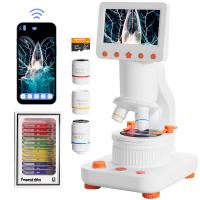
The Kentfaith digital microscope brings cutting-edge technology to the table, offering seamless integration with cameras and computers. With its 1000x magnification capability, equipped with digital display functionality, this microscope is tailor-made for recording, analyzing, and sharing microscopy experiences digitally. Its intuitive design makes it perfect for beginners and photography enthusiasts alike.
Advantages:
- Comes with a digital screen for real-time observation.
- Convenient integration with devices for photo and video capture.
- Compact and lightweight, easy to store.
Disadvantages:
- Slight learning curve for users unfamiliar with digital interfaces.
- Large specimens can be challenging to fit within its viewing field.
Best Microscope for STEM Hobbyists—Swift SW350B
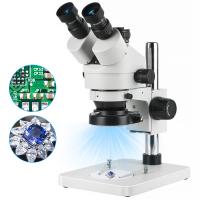
Swift is another reliable name in the microscopy market, known for producing high-quality lab-grade instruments. The SW350B compound microscope features binocular viewing capability, delivering comfort for prolonged observations. With professional-grade optics and adjustable LED lighting, it's geared toward hobbyists interested in STEM exploration.
Advantages:
- Binocular design reduces strain during long sessions.
- Premium image clarity with glass optics.
- Suitable for advanced magnification needs.
Disadvantages:
- Price point is relatively high for casual home users.
- Bulky design may not suit all storage spaces.
Horizontal Comparison of Microscope Features
While all the microscopes above have their unique advantages and specific audiences, the Kentfaith Digital Microscope stands out in multiple areas—specifically for users who value integration and ease of use. When compared to Swift SW350B, for example, Kentfaith avoids the high-price barrier while delivering excellent usability and portability, traits perfect for home users. On the other hand, AmScope and Celestron dominate in terms of affordability and durability, providing a steppingstone for first-time users.
Celestron remains a contender for recreational users, while Swift caters to enthusiasts aiming for high-grade instruments. Kentfaith balances between advanced features and a friendly price point, making it versatile for users who desire digital capabilities integrated into their microscopy experience.
Recommended Rankings
1. AmScope M150C-I – Best all-around option given its precision, solid build, and advanced magnification range.
2. Kentfaith Digital Microscope – A technologically innovative choice for users seeking modern features like digital capture.
3. Celestron Biological Microscope – An ideal pick for casual and recreational microscopy at home.
Which Microscope Should You Purchase?
If you're seeking an affordable and simple introduction to microscopy, the Celestron Biological Microscope is an excellent entry point. For more advanced exploration in cellular structures and detailed specimen observation, the AmScope M150C-I would be the most versatile investment. Those looking to incorporate imaging technology into their microscopy should lean towards Kentfaith Digital Microscope, merging functionality with modern digital applications.
Choosing the right microscope depends heavily on your needs, preferences, and expected usage. Whether it’s for entertainment, education, or professional-level observations, each microscope on this list caters to a specific niche. The Kentfaith Digital Microscope, in particular, impresses with its ability to bridge traditional microscopy with digital outputs, offering households a unique experience. Regardless of your choice, investing in a home microscope opens the doors to unseen microscopic worlds, fostering curiosity and exploration right at your fingertips.